
사람 심리의 문제를 기술로 해결하는, 블루시그넘Bluesignum: Solving Human Psychological Challenges Through Technology
인터뷰어 · 신소민
사람들이 더 나은 감정으로 하루하루를 살아갈 수 있도록, 블루시그넘
블루시그넘은 어떤 팀인가요?
윤) 블루시그넘은 사람들이 더 나은 감정으로 하루하루를 살아갈 수 있도록 일상 중심의 정신건강 관리 서비스를 만드는 팀입니다. 현재 귀여운 기분콩들로 편하게 하루하루를 기록할 수 있는 '하루콩'이라는 앱을 서비스하고 있습니다. 인터렉티브 심리상담 게임 '당신의 상담소'도 펀딩을 마치고 출시를 기다리고 있고, 그 다음 단계의 서비스도 내년 초 정도 출시 예정입니다.
블루시그넘은 어떻게 시작했나요?
윤) 블루시그넘은 서울대학교에서 AI 알고리즘을 활용해 펭귄 로봇을 만드는 프로젝트로 시작했습니다. 블루시그넘 창업 멤버도 여기서 함께하게 됐는데요, 팀원 개개인이 정신건강 문제에 굉장히 관심이 많았습니다. 그런 고민들을 이야기하면 할수록, 창업이라는 방법이 저희가 풀고자 하는 문제를 해결하는 가장 좋은 방법이라고 판단이 들었습니다. 즉, 사업을 먼저 생각했다기보다는 풀려는 문제에 초점이 맞춰져 있던 팀이었다고 할 수 있겠네요.
서비스 기획 과정에서 시장에서 어떤 문제를 발견하고 정의하셨나요?
윤) 첫 번째는 사람들이 전문적인 정신건강 관리를 받기까지의 벽이 굉장히 높다는 점입니다. 실제로 우울장애를 겪는 사람의 20%만이 병원을 이용하고 있고요. 우울감을 느낄지라도 실제로 병원에서 상담을 받는 것으로 이어지지 못하는 경우가 많습니다. 우울 증상을 발견하고 병원에 찾아가기까지 평균적으로 7년이 걸린다는 데이터를 보면 알 수 있죠. 이런 접근성의 문제를 소프트웨어로 해결할 수 있다고 생각했습니다.
하지만 한 가지 거대한 문제가 더 있었습니다. 정신건강의 문제는 '스펙트럼'이라고 많이 표현을 하는데요, 정신건강 상태의 정도에 따라 3~4단계로 그 심각성을 나눈다고 했을 때, 사람들은 보통 본인의 상태보다 한 단계 전으로 스스로를 인식합니다. 그러니까, 저희가 우울증을 갖고계신 분들을 위한 서비스를 만들어도, 우울증을 갖고있는 많은 분들이 자신과 무관한 서비스라고 생각할 것이라는 겁니다. 블루시그넘이 '하루콩'과 같이 일상적인 서비스에서 정신건강 문제의 실마리를 찾는 이유이기도 합니다.
블루시그넘은 이런 문제를 해결하고자 우울감을 겪는 사람뿐만이 아니라, 잠재적으로 우울감을 겪을 가능성이 있는 일반 유저들까지 이용할 수 있는 서비스를 시작으로 단계별 서비스를 제공할 계획입니다. 하루콩처럼 가볍고 말랑말랑한 서비스를 이용하면서 기분과 감정을 돌아보고, 도움이 필요하신 분들은 그 다음 단계의 서비스들로 자연스럽게 나아갈 수 있도록 도울 계획입니다.
그럼에도 '정신건강'을 다룬다는 측면에서 어려운 점이 있을 것 같습니다.
윤) 우선은 정성적인 정보들을 활용하게 되다 보니 '정답'이 없는 문제들을 많이 마주하게 됩니다. 통상적으로, 정신건강 의학은 다른 분야보다 환자의 기분, 상태와 같은 정성적인 정보들을 많이 활용합니다. 그렇기 때문에 필연적으로 그런 정성적 자료에 대한 치료자 개개인의 주관이 개입되고, 여기에 따라 치료 방법과 결과가 크게 달라지기도 합니다. 그렇기 때문에 정신건강 상태를 보다 객관적으로 파악하고, 여기에 맞는 치료를 제공할 수 있는 새로운 패러다임이 제시될 필요가 있다는 것을 느끼고 있고, 그렇다면 이런 상황에서 블루시그넘이 기술적 역량을 활용해 혁신을 가져올 수 있지 않을까, 많이 고민하고 있고 또 희망을 갖고 있습니다.
또 수많은 고민들 사이에서 큰 방향성을 잃지 않기 위해서, 저희는 서비스를 설계할 때 늘 아래 3가지 질문을 통해 저희가 나아가고자 하는 방향으로 나아가고 있는지를 점검하고 있습니다.
- 블루시그넘의 비전에 부합하는가? 현재 우리가 하고자 하는 결정이 사람들이 더 나은 감정으로 하루하루를 살 수 있도록 돕는가?
- 충분히 친절하고 담백한가?
- 내 주변 사람을 위해 만들었어도 같은 결정을 내렸을 것인가?
사람의 심리와 기술의 사이의 균형을 생각하다
블루시그넘의 서비스가 경쟁 서비스와 차별화되게 제공해줄 수 있는 가치는 무엇인가요?
윤) 정신건강의 영역은 흔히 '답이 없는' 영역이라고들 합니다. 단순히 기술 고도화로 문제가 해결되는 것이 아니라, 실질적으로 사람들의 '기분'이나 '감정'이 나아져야 하기 때문입니다. 이런 정성적 데이터를 어떻게 정략적으로 측정하고, 따라서 이를 기반으로 더 나은 기분을 만들기 위해 어떻게 창의적으로 접근해 나갈지가 중요한 문제입니다. 따라서 기술적인 측면뿐만 아니라 사람에 대한 이해와 관심 역시 저희가 풀고자 하는 문제에서 아주 핵심적이라고 할 수 있습니다.
블루시그넘은 이런 측면에서 사람에 대한 이해와 기술에 대한 이해가 좋은 조화를 이루는 팀이라고 생각합니다. 소프트웨어를 통해 확보한 접근성과, 기술을 사람의 관점에서 창의적으로 활용해 사람들이 자신에게 꼭 맞는 콘텐츠를 찾을 수 있게 최적화 해준다는 점이 다른 회사들이 모방하기 힘든 블루시그넘만의 가치라고 생각합니다.
하루콩의 쉬운 UX와 친근하고 귀여운 캐릭터도 이런 창의적인 솔루션의 일환일까요?
윤) 그렇다고도 볼 수 있습니다. 저희 서비스(하루콩)은 앱을 기반으로 하다 보니, 자연스럽게 MZ세대를 타겟으로 하게 됐습니다. 블루시그넘 팀이 가장 잘 아는 세대이기도 하고요. 또한, 이 세대에서 정신건강과 관련된 문제를 해결하고자 하는 움직임이 강하게 나타나고 있다고 판단했습니다.
1차적으로 중장년층이 타겟에서 제외된 이유는, 프로젝트 팀 시절 펭귄 로봇을 만들며 했던 인터뷰와 시장조사의 영향이 컸습니다. 소프트웨어에 대한 접근성뿐만 아니라, 중장년층은 상대적으로 심리적인 문제를 기술로 해결한다는 것에 신뢰가 약하다는 점을 확인했습니다.
그럼에도 타겟 확장의 필요성은 느끼실 것 같습니다.
윤) 타겟 확장에 대한 니즈와 필요성을 충분히 인지하고 있고, 이를 위한 다음 단계로 음성 중심의 소프트웨어 R&D를 진행하고 있습니다. 예컨대, 하루콩과 같이 일기 형식으로 감정을 기록하는 것만으로 정신건강에 도움이 되는 측면이 있는데요, 지금은 앱을 활용하여 MZ세대를 공략했다면, AI스피커를 통해서는 연령과 상관없이 누구나 자신의 감정을 털어놓고 도움을 받을 수 있도록 서비스를 계획하고 있습니다.
그렇다면, 블루시그넘의 수년 뒤는 어떤 모습일까요?
윤) 사실 몇 년 뒤를 그리기에는 아직 초기라 이르다는 생각이 있습니다만, 결론적으로는 사람들이 조금이라도 힘들 때 편하게 찾을 수 있는 친구 같은 서비스를 만들고 싶습니다. 다만, 거시적인 시각에서 저희가 서비스를 만드는 4개 정도의 스텝이 있다고 말씀드릴 수 있겠습니다. 현재 첫 번째 단계를 마무리하는 과정이고요, 4단계가 마무리됐을 때는 디지털 치료제 개발까지 염두에 두고 서비스를 만들고 있습니다.
하루콩 앱을 통해 일상 속에서 스스로를 '쉽게' 돌아보다
블루시그넘의 서비스 '하루콩'은 어떤 서비스인가요?
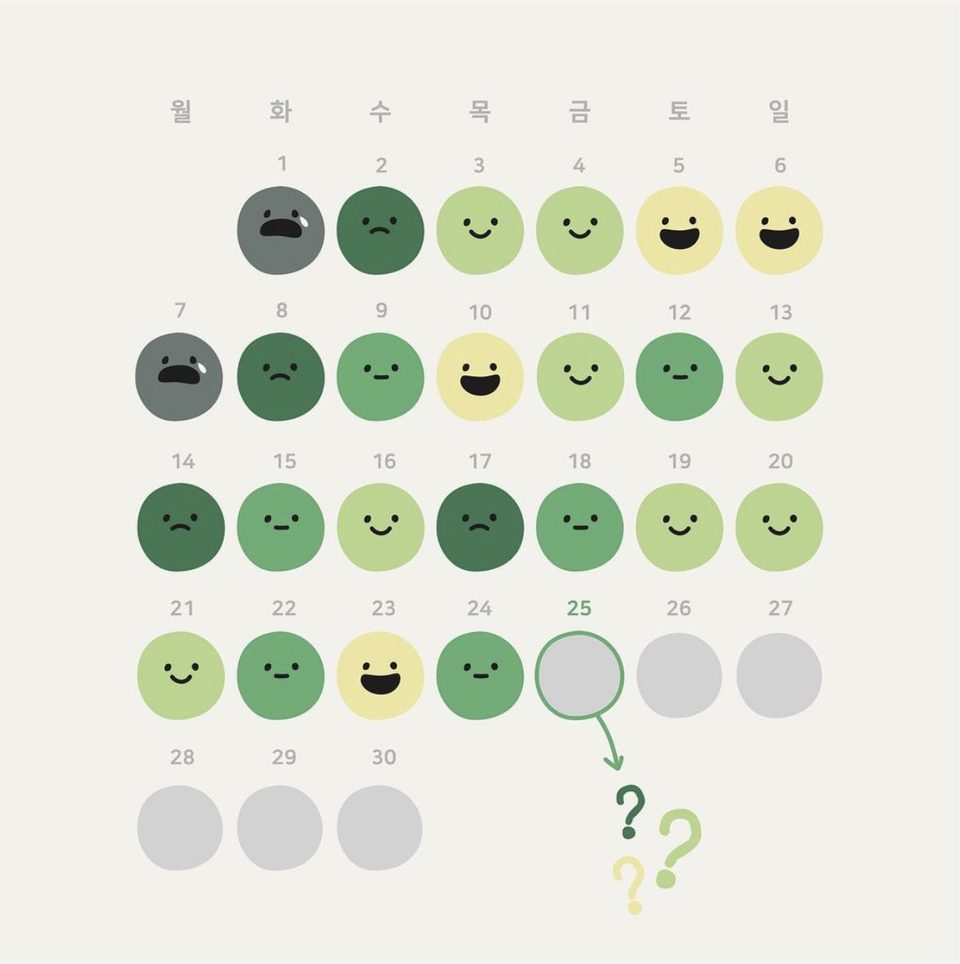
윤) 하루콩은 바쁜 일상 때문에 매일을 기록하려던 다짐을 잊는 사람들을 위해, 간단한 아이콘이 위주가 되는 일기 앱입니다. 앞서 말씀드린 것처럼 사람들이 쉽게 찾을 수 있도록 귀여운 캐릭터들로 간편하게 하루를 기록할 수 있는 앱입니다. 하루콩은 이제 막 서비스를 시작한 지 7개월이 지난 서비스입니다. 현재 출시 7개월 차에 다운로드 48만을 기록했고요, 하루콩을 통해 오늘 하루를 기록한 사람은 3만 2000여 명입니다. 국가 분포도 다양한 편입니다. 한국 유저는 20%이고, 나머지는 해외 유저입니다. 총 155개국에서 글로벌 사용자들이 하루콩으로 하루를 기록하고 있습니다.
하루콩을 만드는 팀원은 어떤 사람들인가요?
윤) 앞서 블루시그넘의 차별점 중 하나가 사람과 기술을 균형을 잘 맞추는 팀이라는 것이라고 언급했는데요, 이런 점이 가능한 이유도 저희 팀원 구성 덕분입니다. 블루시그넘 팀은 대부분 20대이다보니 타겟 유저에 대해한 이해가 매우 높고, 전공도 다양합니다. 심리학, 국어국문학, 교육학, 경영학 같은 문과 전공과 컴퓨터공학, 전기정보공학, 로봇공학 같은 이과 전공의 멤버들이 균형을 이루고 있습니다. 그만큼 여러 각도에서 사람을 이해해낼 수 있다고 생각합니다.
블루시그넘 팀의 극초기부터 후속투자까지 함께한 DHP
DHP는 어떤 경로로 처음 알게 되셨나요?
윤) DHP 최윤섭 대표님의 블로그 디지털 치료제에 관한 글을 읽고 막연히 댓글을 달았는데, 이 것이 인연이 되어 DHP로부터 투자 유치까지 받게 되었습니다. 연락을 드렸을 당시 블루시그넘은 전략이 날카롭지는 않은 상태였습니다. 당시 너무 초기라고 생각돼서 투자까지는 생각도 안 했는데, 최윤섭 대표님이 투자 검토에 관한 제안까지 주셔서 운 좋게 시드 투자까지 이어지게 됐습니다.
DHP에게 투자를 받은 후 어떤 부분이 가장 많은 도움이 되셨나요?
윤) 먼저 투자를 받기 전 오피스아워에 초대받아서 파트너와 자문가 분들 앞에서 블루시그넘에 대해 피칭을 할 기회가 있었습니다. 이때 저희의 컨셉에 대해 전문가분들의 다양한 피드백을 받았던 것이 블루시그넘에게 좋은 성장의 계기가 되었던 것 같습니다. 투자를 받은 후에는, 저희가 '정신건강'이라는 의료 분야를 함께 다루다보니, DHP의 파트너분들이 대부분 의료진으로 이루어져 있다는 점이 큰 도움이 됐습니다. 기사로 보는 소식과 현업의 실제 이야기는 조금 다르다고 생각하는데, DHP 파트너분이 실시간으로 슬랙에서 공유해주시는 정보들을 통해 의료계의 '진짜 소식'을 많이 들을 수 있어서 실질적인 도움을 얻을 수 있었습니다.
또 투자 전후로 받은 멘토링과 자문과 조언 등은 드라마틱한 방향성의 전환보다는, 극초기였던 블루시그넘이 가랑비에 옷 젖듯이 블루시그넘이 사업의 방향성을 확실하게 정립하게 하는 데 많은 도움이 됐습니다.
투자 과정에서 혹시 조금 아쉬운 부분은 없었나요?
윤) 처음 멘토링을 받을 때, '틀린 말 하면 큰일 날 것 같다'는 생각이 들기는 했었습니다(웃음). 워낙 의료와 디지털 헬스케어를 잘 아는 전문가 분들이기 때문에, 잘못된 정보를 말했다가는 신뢰도가 많이 떨어질 것 같은 오해를 하기도 했었습니다. 아쉬운 부분이라기보다는, 어떻게 보면 당연한 부분이기도 하다고 생각합니다.
DHP 투자 과정에서 가장 기억에 남는 부분이 있으신가요?
윤) 현재 진행 중인 pre-A 시리즈 라운딩과 관련한 사례를 들 수 있을 것 같습니다. 시드 투자에 이어 후속 투자 과정에서 저희의 핏에 맞는 하우스를 적극적으로 소개해 주셨습니다. 연결을 시켜주시기도 하고, 저희를 소개하는 메일을 직접 써주시기도 하셨는데, 이런 부분들이 많은 도움이 되고 있습니다.
또한, 'DHP에서 투자를 받았다는 것'만으로도 외부로부터의 신뢰를 얻는 독립 사건이 되기도 합니다. 예컨대, 블루시그넘은 의료 쪽 지식을 많이 활용해서 서비스를 하고 있다 보니, 정부지원사업이나 외부 투자유치를 받는 과정에서 방법론에서 신뢰성에 대한 의문이 많이 제기되곤 합니다. 이럴 때 "디지털 헬스케어 전문 투자사 DHP"에서 투자를 받았다는 사실만으로 많은 의문점들이 자동으로 해소가 되고, 외부적인 신뢰를 얻는 데 크게 도움이 됐습니다.
다른 디지털 헬스케어 스타트업에게 DHP를 추천한다면?
윤) 일단 DHP 최윤섭 대표님이 연락이 굉장히 잘 되십니다. 긍정적인 조언과 격려를 아끼지 않으십니다. 또, 다른 파트너분들도 슬랙에 상주해 계셔서, 자문이 필요할 때 의료, UX, 법률, 인허가 등 모든 영역에서 조언을 구할 전문가가 대기해주시고 있다는 사실도 굉장히 큰 장점입니다. 따라서 딥한 의료 영역을 타겟으로 하는 스타트업이라면 더더욱 DHP를 추천할 만합니다.
또한, DHP 파트너분들이 만나본 투자사 중에서도 굉장히 젠틀한 편에 속한다고 느꼈습니다. 자문과 조언을 아끼지 않으시되, 스타트업에 대한 존중의 태도가 늘 힘이 되곤 합니다.
블루시그넘이 풀고자 하는 문제는 오랜 시간과 노력을 들여야 풀 수 있는 문제라고 생각됩니다. 다양한 시행착오가 잇따르겠지만, 그럼에도 블루시그넘의 비전을 위해 꾸준히 차근차근 나아가고 있으니, 앞으로 블루시그넘이 만들어나갈 정신건강 영역의 변화를 지켜봐 주세요.
또, DHP와의 시너지도 기대해 주세요!
Interviewer · Somin Shin
Bluesignum: Helping people live each day with better emotions
What kind of team is Bluesignum?
Yoon) Bluesignum is a team that builds everyday-centered mental health management services so that people can live each day with better emotions. We currently offer an app called 'Haroocong,' which lets you comfortably record your daily life with cute mood beans. Our interactive psychological counseling game 'Your Counseling Center' has also finished its funding round and is awaiting release, and the next stage of our services is scheduled to launch around early next year.
How did Bluesignum get started?
Yoon) Bluesignum began as a project at Seoul National University to build a penguin robot using AI algorithms. That's also where Bluesignum's founding members came together. Each team member was deeply interested in mental health issues. The more we talked through these concerns, the more we came to believe that starting a company was the best way to solve the problems we wanted to address. In other words, rather than thinking about the business first, we were a team focused on the problem we wanted to solve.
What problems did you discover and define in the market during the service planning process?
Yoon) The first was that the barrier to receiving professional mental health care is extremely high. In fact, only 20% of people suffering from depressive disorders use hospitals. Even when people feel depressed, it often doesn't translate into actually receiving counseling at a hospital. You can see this from the data showing that it takes an average of seven years from noticing depressive symptoms to visiting a hospital. We believed this accessibility problem could be solved through software.
But there was one more enormous problem. Mental health issues are often described as a 'spectrum.' If you divide the severity of mental health conditions into three or four stages, people usually perceive themselves as being one stage earlier than their actual condition. So, even if we build a service for people with depression, many people who actually have depression will think the service has nothing to do with them. This is also why Bluesignum looks for clues to mental health issues within everyday services like 'Haroocong.'
To solve this problem, Bluesignum plans to offer stage-by-stage services, starting with a service that can be used not only by people experiencing depression but also by general users who could potentially experience it. While using a light and gentle service like Haroocong, people can reflect on their moods and emotions, and those who need help can naturally progress to the next stage of services.
Even so, there must be difficulties in dealing with 'mental health' specifically.
Yoon) First, because we use qualitative information, we encounter many problems that have no 'correct answer.' Generally, mental health medicine relies more heavily on qualitative information, such as the patient's mood and condition, than other fields. As a result, each clinician's subjectivity inevitably comes into play regarding such qualitative data, and this can significantly change treatment methods and outcomes. That's why we feel there's a need for a new paradigm that can more objectively grasp mental health conditions and provide treatment tailored to them. In this situation, we spend a lot of time thinking—and holding onto hope—that Bluesignum can bring innovation by leveraging its technological capabilities.
Also, to avoid losing sight of our big-picture direction amid countless considerations, when designing our services we always check whether we're heading in the direction we intend through the following three questions:
- Does it align with Bluesignum's vision? Does the decision we're currently trying to make help people live each day with better emotions?
- Is it kind and straightforward enough?
- Would we have made the same decision if we'd built it for the people around us?
Considering the balance between human psychology and technology
What value does Bluesignum's service provide that differentiates it from competing services?
Yoon) The mental health domain is often called an area with 'no clear answers.' That's because problems aren't solved simply through technological advancement—people's 'moods' or 'emotions' have to genuinely improve. The important challenge is how to quantitatively measure such qualitative data, and, based on that, how to creatively approach the goal of creating better moods. So beyond the technical side, understanding of and interest in people is also absolutely central to the problem we're trying to solve.
In this respect, I think Bluesignum is a team that strikes a good harmony between understanding people and understanding technology. The accessibility secured through software, and the way we creatively apply technology from a human perspective to optimize things so people can find content that's a perfect fit for them—these are Bluesignum's unique values that other companies find hard to imitate.
Are Haroocong's easy UX and friendly, cute characters part of these creative solutions?
Yoon) You could say so. Since our service (Haroocong) is app-based, we naturally came to target the MZ generation. It's also the generation Bluesignum's team knows best. Moreover, we judged that there's a strong movement within this generation to address mental health-related issues.
The main reason the middle-aged and older demographic was initially excluded from our target was largely due to the interviews and market research we did while building the penguin robot during our project team days. We confirmed that, beyond just accessibility to software, older generations have relatively weaker trust in solving psychological problems through technology.
Even so, you probably feel a need to expand your target audience.
Yoon) We're fully aware of the need and necessity of expanding our target, and as the next step we're conducting voice-centered software R&D. For example, just recording emotions in a diary format, like with Haroocong, has benefits for mental health. While we've targeted the MZ generation using an app so far, through AI speakers we plan to build a service that lets anyone, regardless of age, open up about their emotions and receive help.
So what will Bluesignum look like several years from now?
Yoon) Honestly, I think it's still too early to sketch out where we'll be in a few years, but ultimately we want to build a service that feels like a friend—one people can comfortably turn to whenever they're even a little bit struggling. That said, from a macro perspective, I can say there are about four steps in building our services. We're currently wrapping up the first stage, and by the time the fourth stage is complete, we're building our services with digital therapeutics development in mind.
Easily reflecting on yourself in everyday life through the Haroocong app
What kind of service is Bluesignum's 'Haroocong'?
Yoon) Haroocong is a diary app centered on simple icons, made for people who forget their resolution to record each day because of busy daily lives. As I mentioned earlier, it's an app that lets you easily record your day with cute characters so people can readily turn to it. Haroocong is a service that has just passed seven months since launch. As of seven months in, it has recorded 480,000 downloads, and about 32,000 people recorded their day through Haroocong today. The distribution across countries is quite diverse. Korean users make up 20%, and the rest are overseas users. Global users across a total of 155 countries are recording their days with Haroocong.
What kind of people make up the team that builds Haroocong?
Yoon) Earlier I mentioned that one of Bluesignum's differentiators is being a team that balances people and technology well, and this is possible thanks to our team composition. Since most of Bluesignum's members are in their 20s, we have a very high understanding of our target users, and our majors are diverse too. We have a balance of members from humanities majors like psychology, Korean language and literature, education, and business administration, and science majors like computer engineering, electrical and information engineering, and robotics. I believe this allows us to understand people from many different angles.
DHP, with Bluesignum from the earliest days through follow-on investment
How did you first come to know DHP?
Yoon) I read a post about digital therapeutics on the blog of DHP CEO Yoonsup Choi and casually left a comment. That became a connection that led all the way to securing investment from DHP. At the time I reached out, Bluesignum's strategy wasn't yet sharply defined. I thought we were too early-stage at the time and didn't even consider investment, but CEO Yoonsup Choi went as far as proposing to review an investment, and we were fortunate enough to secure seed investment.
After receiving investment from DHP, what helped you the most?
Yoon) First, before receiving investment, I was invited to an office hours session where I had the chance to pitch Bluesignum in front of the partners and advisors. Receiving diverse feedback from experts on our concept at that time was a great catalyst for Bluesignum's growth. After receiving investment, since we deal with the medical field of 'mental health' together, the fact that most of DHP's partners are medical professionals was a huge help. I think there's a bit of a difference between news you read in articles and the actual stories from the field, and being able to hear a lot of the medical community's 'real news' through the information DHP partners share in real time on Slack gave us practical help.
Also, the mentoring, consulting, and advice we received before and after investment—rather than dramatically shifting our direction—helped the early-stage Bluesignum firmly establish its business direction, like clothes gradually soaking through in a fine drizzle.
Was there anything a bit disappointing during the investment process?
Yoon) When I first received mentoring, I did feel like 'saying something wrong could be a disaster' (laughs). Because they're such experts who know medicine and digital healthcare so well, I had the misconception that saying incorrect information might greatly lower my credibility. Rather than something disappointing, I think it's a natural part of the process in a way.
Is there anything most memorable about the DHP investment process?
Yoon) I could point to something related to the pre-A series round we're currently in. Following the seed investment, during the follow-on investment process, they actively introduced us to houses that were a good fit for us. They made connections for us and even personally wrote emails introducing us, and these things are proving to be a great help.
Also, 'having received investment from DHP' can itself become a standalone event that earns trust from outside parties. For example, since Bluesignum runs its service by drawing heavily on medical knowledge, we often face questions about the credibility of our methodology during government support programs or when attracting external investment. In those moments, simply the fact that we received investment from "DHP, a specialized digital healthcare investment firm" automatically resolves many of those doubts, and it greatly helped us earn external trust.
If you were to recommend DHP to other digital healthcare startups?
Yoon) First of all, DHP CEO Yoonsup Choi is extremely responsive. He never spares positive advice and encouragement. Also, the other partners are present on Slack, so the fact that whenever you need advice there are experts on standby to consult across all areas—medicine, UX, law, regulatory approval, and more—is a huge advantage. So for startups targeting a deeply medical domain, I'd recommend DHP even more.
Moreover, I felt DHP's partners are among the very gentle ones among the investment firms I've met. They generously offer consultation and advice, and their attitude of respect toward startups has always been a source of strength.
I believe the problem Bluesignum is trying to solve is one that can only be solved with a great deal of time and effort. There will surely be various trials and errors, but we're steadily and step by step moving toward Bluesignum's vision, so please keep an eye on the changes Bluesignum will bring to the mental health domain.
Also, please look forward to the synergy with DHP!