
의료AI 미래 그리는 빅테크, 글로벌 시장 뚫는 K-헬스케어Big Tech Charts the Future of Medical AI, K-Healthcare Breaks Into Global Markets
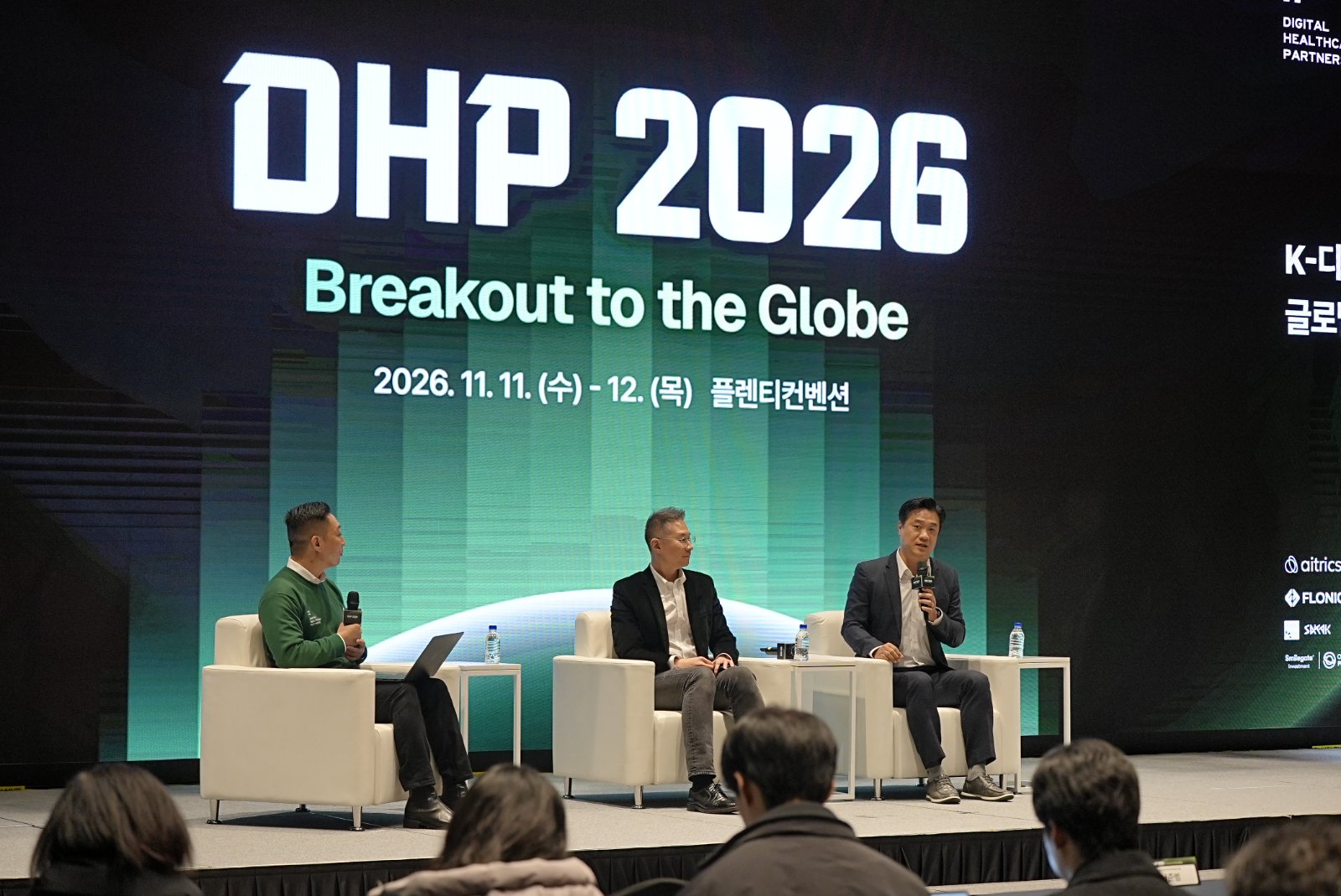
국내 의료AI 기업들이 해외 의료기관 공급망과 보험시장 확보에 속도를 내고 있다. 기술 경쟁을 넘어 국가별 의료제도에 맞는 판매·서비스 체계를 갖추는 것이 글로벌 사업의 승부처로 떠올랐다.
디지털 헬스케어 파트너스(DHP)는 11일 서울 가톨릭대 성의교정 옴니버스파크에서 'DHP 2026'을 개최했다. 'K-디지털 헬스케어, 글로벌로의 돌파'를 주제로 열린 행사에서 빅테크는 의료AI의 확장 가능성을, 국내 상장사들은 해외 사업화의 조건을 제시했다.
김경훈 오픈AI 코리아 총괄 대표는 진료실 밖에서 쌓이는 건강정보와 의료기록을 연결해 환자의 진료 준비를 돕고 의료진 업무를 지원하는 AI 활용 사례를 소개했다. 신약개발 연구에서도 AI가 치료 표적을 탐색하고 근거를 검토하는 역할을 확대할 것으로 전망했다.
최준일 삼성헬스 상무는 웨어러블 기기로 수집한 수면·운동 등 일상 건강정보를 의료서비스와 연계하는 방향을 제시했다. 건강 상태를 측정하는 데 그치지 않고 병원 진료와 사후 관리까지 연결하는 것이 목표다.
국내 기업들의 과제는 기술을 실제 구매와 이용으로 연결하는 것이다. 서범석 루닛 대표는 해외 의료기기 업체와 협력해 제품을 판매하던 방식에 한계를 느껴 미국 등 핵심 시장에서 고객을 직접 확보하는 전략으로 전환했다고 설명했다. 2024년 인수한 볼파라의 미국 의료기관 네트워크를 활용해 자사 AI 제품 공급을 확대하는 방식이다.
서 대표는 의료AI의 사업화 경로를 보험수가를 확보하는 제품과 병원이 직접 구매하는 제품으로 구분했다. 병원 구매형 제품은 판독시간 단축 등 업무 효율 개선 효과를 입증하는 것이 중요하다고 강조했다. 미국 진출을 국내 사업의 단순한 연장선이 아닌 별개의 사업으로 접근해야 한다는 설명도 덧붙였다.
씨어스테크놀로지는 국내 장기 심전도 검사 사업 경험을 바탕으로 미국 비급여 의료시장과 중동을 공략한다. 미국에서는 기존 청구·운영 체계를 활용하기 위한 현지 기업 인수를 검토하며 실사를 진행하고 있다. 반면 쓰리빌리언은 기업 인수보다 미국 현지 검사실을 직접 구축해 보험시장에 진입하는 방식을 택했다. 현재 83개국에 희귀질환 유전체 검사 서비스를 제공한다.
코어라인소프트는 독일 폐암검진 보험 적용을 발판으로 고객을 늘리고 프랑스·이탈리아 등 유럽 국가에서 시범사업을 추진한다. 신규 검진시장이 형성되는 초기에 진입해 고객 기반을 확보하는 전략이다.
금창원 쓰리빌리언 대표는 빅테크가 제시하는 의료데이터 통합과 AI 신약개발 가능성을 평가하면서도 실제 임상에서 활용할 고품질 데이터 부족이 여전히 병목이라고 지적했다. AI 기술 자체보다 데이터 확보와 의료현장 적용이 산업 성장의 관건이라는 의미다.
최윤섭 DHP 대표는 “한국 디지털 헬스케어의 다음 10년은 글로벌 시장에서 결정될 것”이라며 “DHP 2026이 한국의 디지털 헬스케어가 글로벌로 돌파하는 출발점이 되기를 바란다”고 밝혔다.
Korean medical AI companies are accelerating efforts to secure overseas healthcare provider supply chains and insurance market access. Beyond technology competition, building sales and service systems tailored to each country's healthcare system has emerged as the decisive battleground for global business.
Digital Healthcare Partners (DHP) held 'DHP 2026' on the 11th at Omnibus Park, Songeui Campus of the Catholic University of Korea in Seoul. At the event, held under the theme 'K-Digital Healthcare, Breaking Through to Global,' Big Tech presented the expansion potential of medical AI, while Korean listed companies laid out the conditions for overseas commercialization.
Kyunghoon Kim, Country General Manager of OpenAI Korea, introduced AI use cases that connect health information and medical records accumulated outside the clinic to help patients prepare for consultations and support medical staff in their work. He also projected that AI will expand its role in drug discovery research by exploring therapeutic targets and reviewing evidence.
Junil Choi, Executive Vice President at Samsung Health, presented a direction for linking everyday health data such as sleep and exercise collected via wearable devices with medical services. The goal is not merely to measure health status but to connect it to hospital care and follow-up management.
The challenge for Korean companies is translating technology into actual purchases and usage. Beomseok Suh, CEO of Lunit, explained that after encountering limitations in the approach of selling products through partnerships with overseas medical device companies, the company shifted to a strategy of directly acquiring customers in core markets such as the United States. The approach leverages the U.S. healthcare provider network of Volpara, acquired in 2024, to expand the supply of its own AI products.
CEO Suh divided the commercialization paths for medical AI into products that secure insurance reimbursement and products that hospitals purchase directly. For hospital-purchased products, he emphasized the importance of demonstrating operational efficiency gains such as reduced reading times. He added that entering the U.S. should be approached as a separate business rather than a simple extension of domestic operations.
Seers Technology is targeting the U.S. non-reimbursed healthcare market and the Middle East based on its experience in Korea's long-term ECG monitoring business. In the U.S., it is conducting due diligence while reviewing the acquisition of a local company in order to leverage existing billing and operational infrastructure. In contrast, 3billion chose to enter the insurance market by directly establishing its own laboratory in the U.S. rather than acquiring a company. It currently provides rare disease genomic testing services in 83 countries.
Coreline Soft is expanding its customer base on the back of insurance coverage for lung cancer screening in Germany and is pursuing pilot programs in European countries including France and Italy. The strategy is to enter at the early stage when new screening markets are forming and secure a customer base.
Changwon Keum, CEO of 3billion, assessed the potential for medical data integration and AI-driven drug discovery presented by Big Tech, but pointed out that the shortage of high-quality data usable in actual clinical practice remains a bottleneck. In other words, securing data and applying it in clinical settings—rather than AI technology itself—is the key to industry growth.
Yoonsup Choi, CEO of DHP, stated, "The next decade of Korean digital healthcare will be determined in the global market," adding, "I hope DHP 2026 becomes the starting point for Korean digital healthcare's breakthrough into the global market."